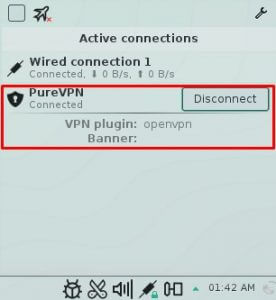
Ensure secure and anonymous work on your OpenSUSE Leap operating system by utilizing PureVPN. Discover the step-by-step guide on setting up PureVPN on OpenSUSE Leap.
Find your VPN credentials for manual configuration
To find your VPN credentials log into the PureVPN member area. Click 👉 here to visit Member Area.
- Login to the Member Area using your PureVPN registered email address and password.

- On Subscription tab scroll down to be able to view your VPN credentials.

- You will be able to see and copy your VPN credentials.
- Note down your PureVPN username and click the Eye icon to make your password visible and use it in the manual configuration.

How to connect PPTP on Linux OpenSUSE Leap
- Go to the Application Launcher and search and open Yast.
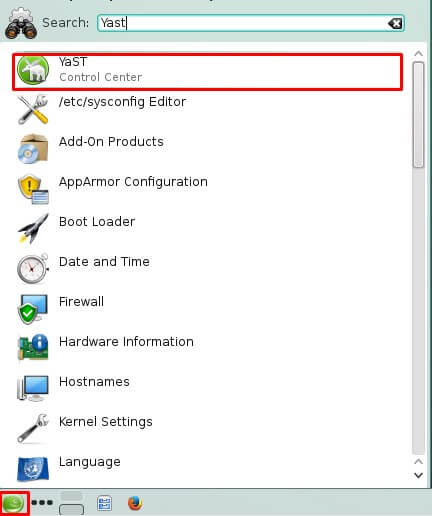
- Scroll down and select Network Settings.
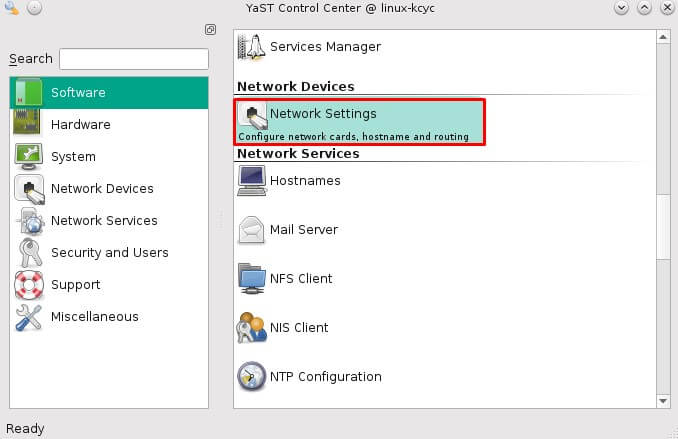
- Go to Global Options then select Network Manager Service option under Network Setup Method.
- Click Wired Connections then select Settings.

- Click Add to add a VPN connection then select PPTP from the drop-down list.
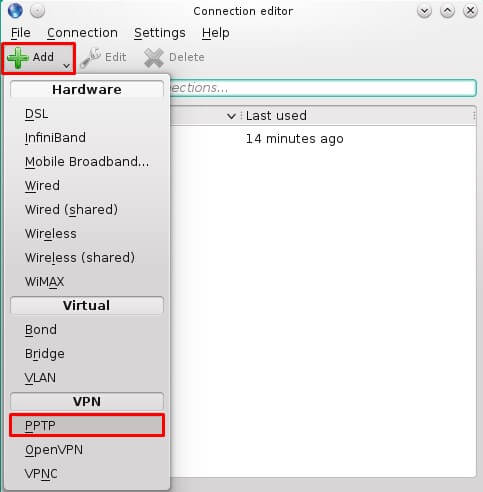
Enter the following info:
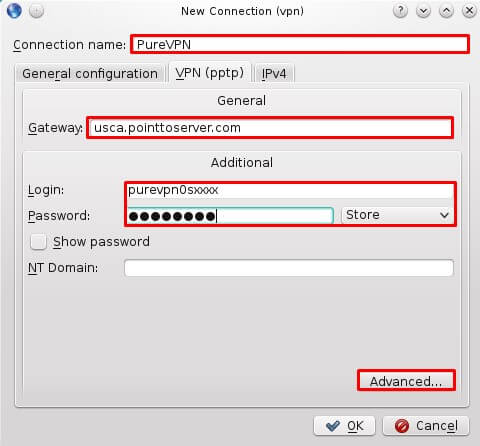
- Enter Connection name: PureVPN
- Insert the desired server: These servers can be utilized for the PPTP protocol.
- Germany: de1.pointtoserver.com
- Netherlands: nl1.pointtoserver.com
- United Kingdom: ukl1.pointtoserver.com
- United States: ustx1.pointtoserver.com
- United States: uswdc1.pointtoserver.com
- Australia: au-sd1.pointtoserver.com
- Enter your PureVPN credentials. Here is how you can find your VPN credentials.
- Click Advanced option.
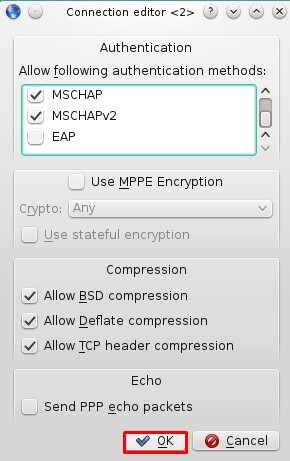
Check the following options under it:
- MSCHAP.
- MSCHAPV2.
- Allow BSD compression.
- Allow Deflate compression.
- Allow TCP Header compression.
- Click OK and close the Networks window.
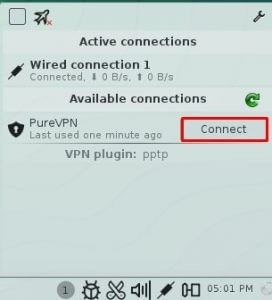
- Click Wired Connections and select the newly created VPN connection then click Connect to enable PureVPN.
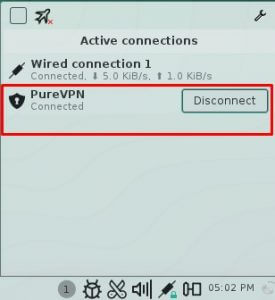
- You are now connected to PureVPN!
How to connect OpenVPN on Linux OpenSUSE Leap
- Go to the Application Launcher and search and open Yast.
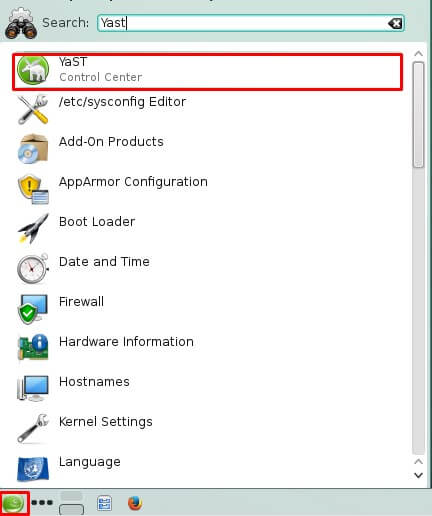
- Scroll down and select Network Settings.
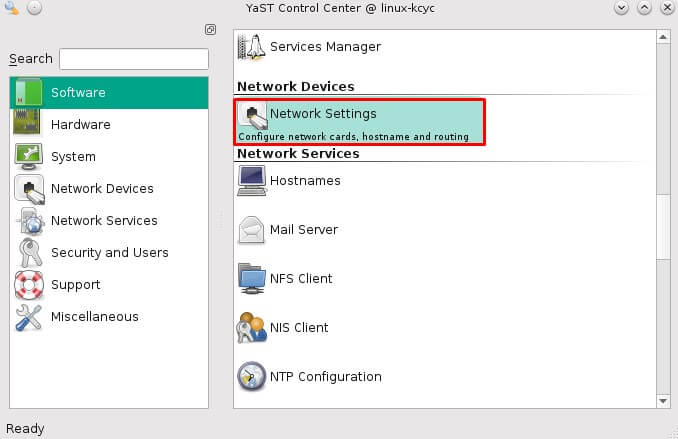
- Go to Global Options then select Network Manager Service option under Network Setup Method.
- Click OK.
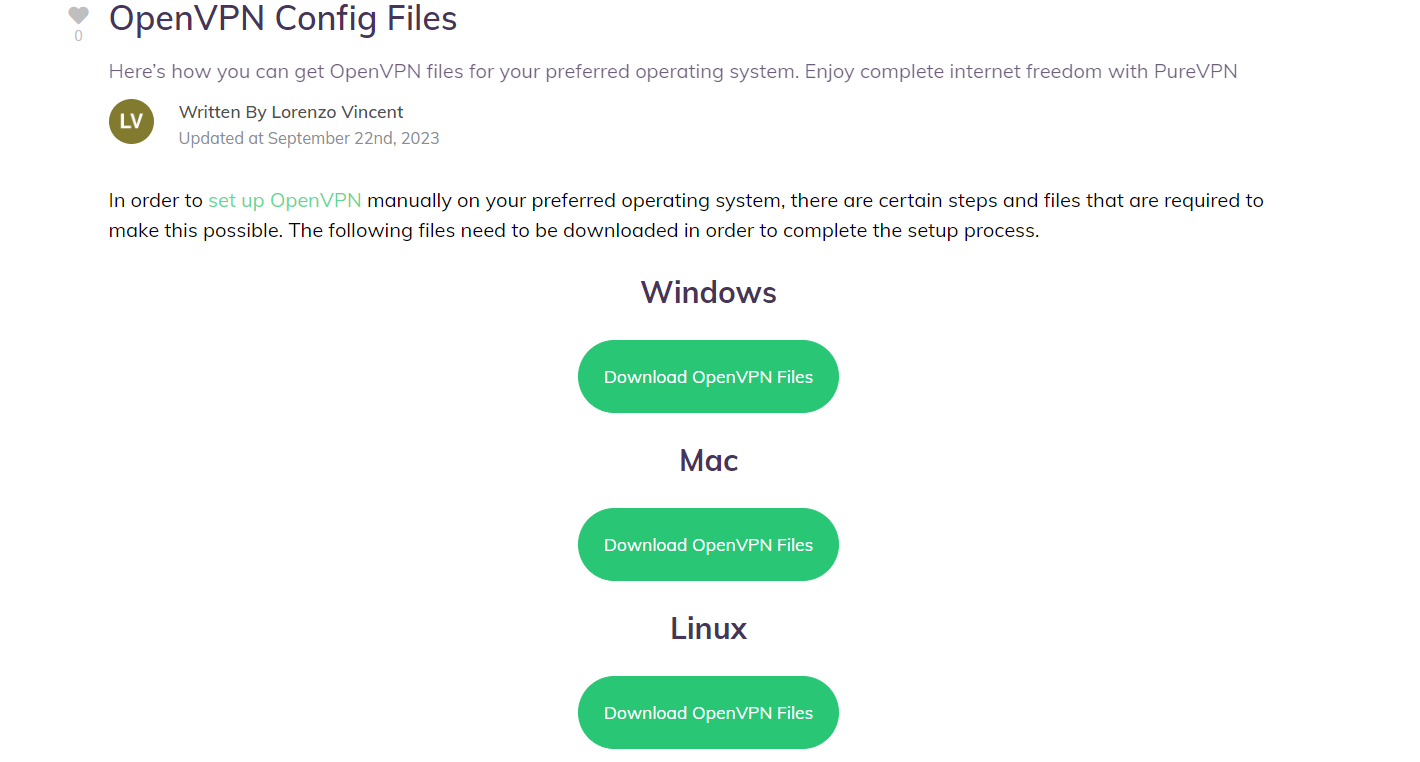
- Open your default browser and download OpenVPN configuration files, click👉 here.
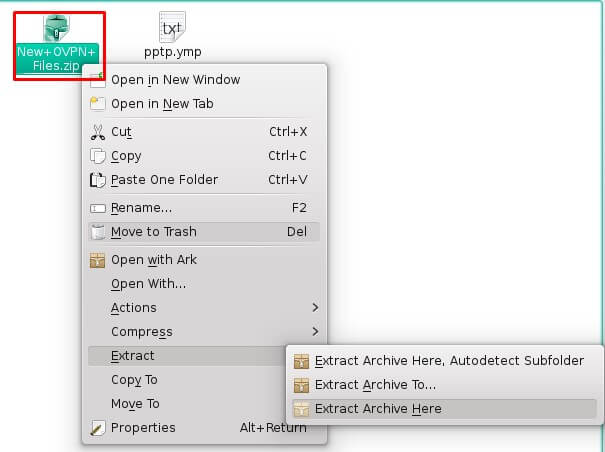
- Right-click the New+OVPN+Files.zip file and Extract the files into a folder of your choosing.
- Click Wired Connections then select.

- Click Add to add a VPN connection then select OpenVPN from the drop-down list.
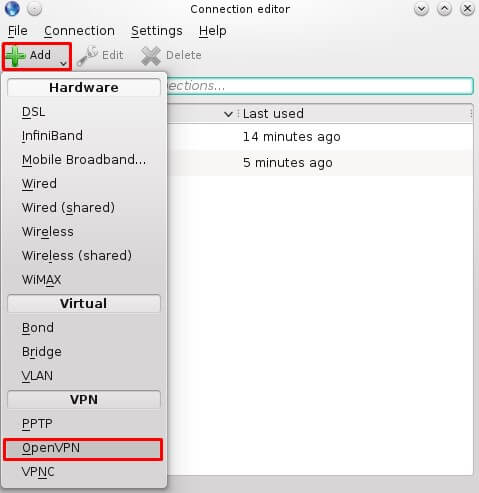
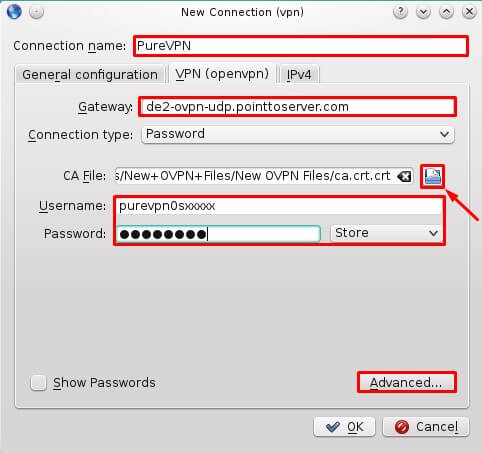
Insert the following info:
- Connection name: PureVPN
- Gateway: de2-ovpn-udp.pointtoserver.com (Here we use de2-ovpn-udp.pointtoserver.com you can also use your desired server address, in order to see the complete list👉click here)
- Connection Type: OpenVPN
- CA File: Click folder icon for CA Certificate and upload the ca.crt.crt file from the OpenVPN configuration files you just downloaded.
- Enter your PureVPN credentials. Here is how you can 👉 find your VPN credentials.
- Click Advanced.
- From General tab select following options:
- Check Use custom gateway port: For UDP insert 53 and For TCP insert 80
- Note: For TCP connection select Use a TCP Connection.....
- From Security tab select following options:
- From Cipher: Select AES-256-CBC
- From HMAC Authentication: Select SHA-1
- From TLS Settings:
- Mode = TLS-Auth
- Key File = Click folder icon next to Key File. Go to OpenVPN downloaded folder, select key and click Open
- Key Direction = Client (1)
- Click OK and close Networks window.
- Click Wired Connections then select Settings.
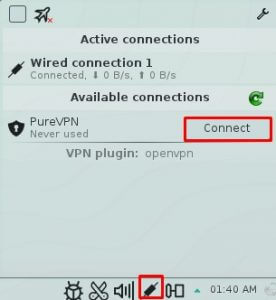
- You are now connected to PureVPN!